

Introduction
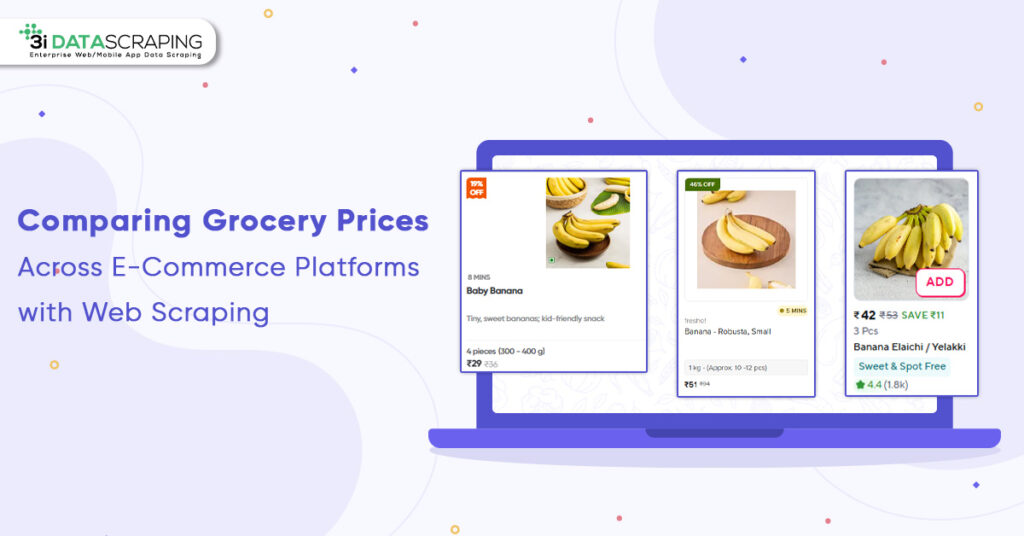
The digital revolution has transformed the way consumers shop, and on-demand grocery platforms have experienced a surge in popularity. The convenience of selecting from a massive product offering and having essentials delivered directly is unmatched. However, this change introduces increased complexity, and grocery prices online are dynamic and influenced by factors such as demand fluctuations, stock availability, promotions, and delivery logistics. These price fluctuations can make it difficult for consumers to find the best price, and equally, it is challenging for businesses to ensure they remain competitive.
That is where web scraping can be a game-changer. Web scraping is the technology of extracting data from webpages. Suppose a consumer can rely on web scraping, people who are familiar with navigating their grocery shopping website. In that case, they can employ web scraping to automate the extraction and comparison of prices in real-time on grocery platforms like Blinkit, Zepto, Instamart, and Bigbasket, to help consumers and businesses stay up to date and adaptable in a rapidly changing online grocery environment.
Is There a Growing Need for Real-Time Grocery Price Tracking?
As the online grocery market becomes increasingly crowded, real-time pricing intelligence is no longer a nice-to-have; it’s a must-have. Prices for groceries and everyday essentials on platforms (Bigbasket, Zepto, etc.) fluctuate frequently, based on local inventory levels, promotions, or changes in supply chains. This variability ultimately equates to consumers having a wide price range for the same product at a higher degree of frequency than in a brick-and-mortar environment. With the increasing demand for online transactions, there is a need for a tool that enables consumers to stay informed about the ongoing changes in the digital landscape of grocery prices.
From a business perspective, retailers and aggregators need price intelligence to make informed pricing decisions, stay ahead of competitors, and ultimately deliver value to consumers. While retailers can make pricing errors due to timing and supply chain issues, they risk pricing higher than their competitors’ or pricing lower than their calculated margin or cost of goods. Having real-time information is a critical factor in decision-making and in preventing the negative consequences of pricing errors. In a world where the cloud is the grocery store, web scraping represents an obvious and incredibly effective way to meet both consumer and business needs – allowing and automating the capture of pricing data required for individuals and businesses to act quickly regarding food and everyday essentials. Ultimately, by scraping prices, companies can make more informed decisions regarding inventory plans, discount strategies, and promotional tactics, while enabling consumers to maximize their budgets and make more informed purchasing decisions.
What Is the Magic of Web Scraping in Automating Price Comparison?
Web scraping is fundamentally the modern version of pricing intelligence. Companies utilize bots or automated systems to scrape structured information from web pages, alleviating the process of data entry. Within the e-commerce grocery space, it means collecting data points such as product titles, prices, discounts, out-of-stock status, and delivery prices from dozens to hundreds of listings simultaneously across multiple markets in real-time.
Web scraping tools, powered by AI, have taken this one step further by adapting to structural changes on websites, differentiating between product variations, and even detecting the misclassification of listings to a lesser degree in categories such as weight or food. They are also able to clean, validate, and normalize the scraped data, enabling easier comparisons—whether you’re comparing apples to apples or limes to lemons.
You can utilize the gathered data for price comparison dashboards, predictive pricing model software, and alert systems for shoppers. Consumers benefit from always being able to find the best deal. At the same time, retailers can keep tabs on competitors and proactively position their pricing ahead—if the vendor allows them to do so. The scalability provided by web scraping is priceless within the grocery sector.
What Are the Benefits of Web Scraping for the Online Grocery Ecosystem?
For Consumers
- Save Money: Use discount tracking to find great deals.
- Save Time: No need to search between different price checking platforms.
- Better Decision Making: Utilize comprehensive price trackers to make informed, data-driven purchasing decisions.
- Budget Management: Real-time price tracking helps plan purchases and manage budgets effectively.
For Business
- Benefits Competitively: Gather competitive pricing and promotional information to capitalize on them.
- Optimize Pricing: Leverage consumer behavior and market trends to create dynamic pricing and promotions.
- Enhance Market Research: Stay informed about price points, trends, and consumer preferences to inform strategic decisions.
- Improve Customer Experience: Price competitively and understand customer preferences to improve satisfaction and loyalty.
- Better inventory Management: Use available product listings to understand trends and plan for shifts in demand.
How Price Variability Affects Consumer Behavior?
Price changes have a substantial impact on consumer behavior. When consumers face frequent price changes, they tend to:
- Have lower loyalty to brands, buying based on the lowest price regardless of where it is located.
- Abandon their cart more frequently when price changes occur between product selection and checking out.
- Sustain price fatigue that causes them to delay or avoid purchases entirely.
Price changes can sometimes create a sense of urgency for impulse buys before expected price increases. Businesses must recognize these patterns in behavior so they can make pricing strategies that reflect consumer behavior—including timed promotions, loyalty discounts, and price guarantees—to keep customers engaged and lessen churn.
Web scraping enables businesses to identify these behaviors earlier in the cycle and adjust their approach accordingly.
What Are the Regional Price Differences and Hyperlocal Insights?
Web scraping isn’t just about viewing national-level prices about the entire market; it also provides fine details and hyper-local insights that are valuable in the current digital retail environment. Prices for groceries typically vary from location to location, regardless of whether this is due to state or local taxes, supplier contracts, delivery reach, or regionalized promotions.
Simply put, for the same brand of rice, the price can vary significantly in Mumbai or Delhi, and even between neighborhoods within the same city. Retailers consider local buying habits, as well as the popularity of specific stores and their competitors, when determining pricing. Web scraping tools enable collection and analysis of this geographically centric data that can define the opportunity for profitability and can provide insights such as:
- Regional Pricing Variances: Identify regions that require a pricing level adjustment.
- Regionalized Promotions: Identify promotions at the ZIP code or regional level.
- Regional Stocking: Identify which items are most popular in specific territories to optimize in-store selection more effectively.
The localized data is critical for online grocery players and traditional grocers seeking to utilize and expand their online businesses.
How to Use Grocery Pricing Data in Real-Time Applications?
Real-time scraped grocery pricing data has a wide range of practical applications that enhance both the user experience and business operations. Consumers can utilize scraped data in mobile applications that display prices across platforms and notify users when a desired item drops in price or becomes available on sale. On the business side, pricing data is retrieved to be displayed on intelligent dashboards for procurement teams and category managers, enabling them to respond to changes in real-time. These dashboards allow real-time analytics to track competitors, identify pricing patterns, and facilitate informed decision-making. Additionally, you can use scraped data in:
- Retail Chatbots: Chatbots can provide users with the lowest price options or answer questions about item availability.
- Intelligent Shopping Assistants: AI algorithms can generate low-cost shopping lists for shoppers to use based on their shopping habits and activities.
- Personalized Offers: Dynamic pricing engines will enable users to receive different discount rates on items based on their purchase history and market pricing.
The real-time element of this type of data creates new and more dynamic ways for companies to build engagement with customers, enabling them to develop more innovative and responsive retail systems.
What Are the Types of Data Extracted via Web Scraping
When scraping grocery platforms for price comparison, extracted data can include:
- Product Name, Brand Name, and Price
- Discounts & Promotions
- Product Weight/Volume
- Retailer Name
- Stock Availability
- Delivery & Shipping Costs
- Customer Reviews and Ratings
3i Data Scraping: Your Partner in Grocery Data Extraction
3i Data Scraping provides solutions for extracting, processing, and analyzing grocery data. Their tools and APIs collect a variety of data on grocery products at a massive scale, effectively deal with pricing changes in real-time, and can overcome anti-scraping tools. They provide hyperlocal and customized data extraction capabilities, build quality into their extraction process, and deliver data in practical output formats, including XML, CSV, JSON, and API Integration.
What Are the Ethical and Legal Considerations?
The ethical and legal ramifications of web scraping must be considered when facing the dilemma. First, be mindful of the website’s terms of service, robots.txt file, and applicable privacy laws. 3i Data Scraping aims to connect the dots ethically and legally.
The Future of Grocery Price Comparison with Web Scraping
Technology is advancing rapidly, and so is the grocery price comparison industry. What was once limited web scraping when discussing data extraction is now bound by limitless emerging technologies redefining how pricing data is captured, synthesized, and utilized. Here is one speculation on where we are heading:
AI Price Prediction:
Predictive algorithms will ultimately enable price prediction before prices change, as systems will recognize patterns from historical pricing cycles, seasonal drivers, and competitive forces. It allows retailers to use the data to pre-emptively position themselves against the marketplace and for grocery shoppers to pre-emptively plan their purchasing efforts around them.
Voice Assistant Integration:
Through the use of voice-activated technology, such as Amazon Alexa and Google Assistant, grocery price comparison will become easier than ever. Users will be able to ask their device, “Where can I get the cheapest organic milk?” and receive a data-driven response.
Personalized Grocery Pricing:
As AI and web scraping are used to transform grocery pricing, we are entering the era of hyper-personalization. Unlike targeted promotions and advertising, grocery platforms will use variables that break down to user personalized pricing based on their shopping preferences, shopping habits, geographic location, and loyalty status.
Blockchain Price Transparency:
Blockchain will provide an immutable path for price trails, giving users the ability to validate both the accuracy and fairness of historical pricing, which could provide some degree of trust in promotional pricing and discounts.
Data Visualization:
The data collected from web scraping will increasingly be shared through graphical formats, including dashboards, consumer-facing interfaces, and data visualization app formats. This functionality will enable price data to shift from raw data to insights, informing grocery consumers’ choices and business owners’ price-informed strategies, all completed visually and interactively.
These types of developments suggest a more innovative, responsive, and hopefully more equitable future for online grocery retail. And web scraping will be the driver that fuels these innovative evolutions, from a a simple data gathering tool to a a digital commerce intelligence infrastructure.
Conclusion
As the grocery market becomes increasingly digital, both prices and consumer expectations are constantly evolving. That means it is no longer enough to rely on instinct and suppliers’ static prices for competitive decisions. Real-time decisions based on data are what will keep you competitive today. Web scraping has the potential to change the game for anyone—consumer or business—who struggles to cut through the complexity of the grocery marketplace. For consumers, web scrapers will enable you to shop more intelligently, access personalized deals, easily manage shopping carts, and more. For businesses, it provides information on dynamic pricing, regional targeting, inventory planning, and more.
That said, this power won’t last without responsible use of tools such as web scraping. For example, ethical scraping, consideration of legal frameworks, and adherence to platform guidelines are essential to ensure sustainability and trust in data-driven ecosystems. Change will continue to evolve with the integration of AI, automation, and real-time data applications. Companies that adopt these services will drive innovation, enhance customer satisfaction, and achieve greater success in retail management.
Based on what we heard – If you’re a company looking for a proven, compliant, and scalable partner in the grocery web scraping journey, rest assured that 3i Data Scraping provides end-to-end grocery data solutions that go beyond extraction to deliver accuracy, customization, and insights for markets that are today hyperlocal and highly competitive. 3i Data Scraping can help you to SORT through it all and provide a path forward that maximizes your use of grocery web scraping.
About the author
Olivia Bennett
Content Writer
Olivia is a skilled content writer who writes engaging and SEO-friendly articles. With over 5 years of writing experience, Olivia transforms ideas into captivating stories. With a strong command over writing and research, she creates content that connects brands with their audience and drives meaningful engagement.